Dimensione del font
  • A-
  • A
  • A+
Colori del sito
  • R
  • A
  • A
  • A
Vai al contenuto principale
Moodle frecvență de zi Moodle frecvență de zi
  • Home
  • Calendario
  • Altro
Italiano ‎(it)‎
Deutsch ‎(de)‎ English ‎(en)‎ English ‎(es)‎ Français ‎(fr)‎ Italiano ‎(it)‎ Română ‎(ro)‎ Русский ‎(ru)‎
Ospite
Login
Moodle frecvență de zi
Home Calendario
Espandi tutto Minimizza tutto
  1. LSSP
  2. Crimes and Civil Wrongs.
  3. Activity 6. Tort vs Crime. Read the following introductory notes.

Activity 6. Tort vs Crime. Read the following introductory notes.

Tort vs Crime

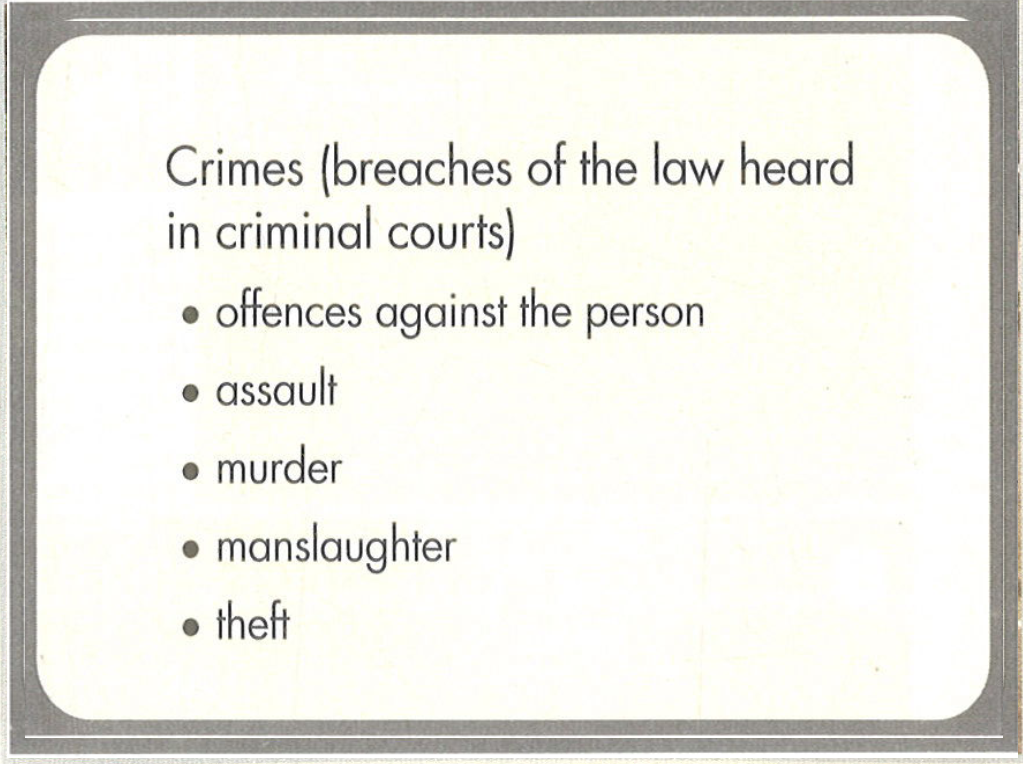
A crime is an illegal act which may result in prosecution and punishment by the state if the accused (the person or people charged with a crime) is / are convicted (found guilty in a court of law). Generally, in order to be convicted of a crime, the accused must be shown to have committed an illegal (unlawful) act with a criminal state of mind.
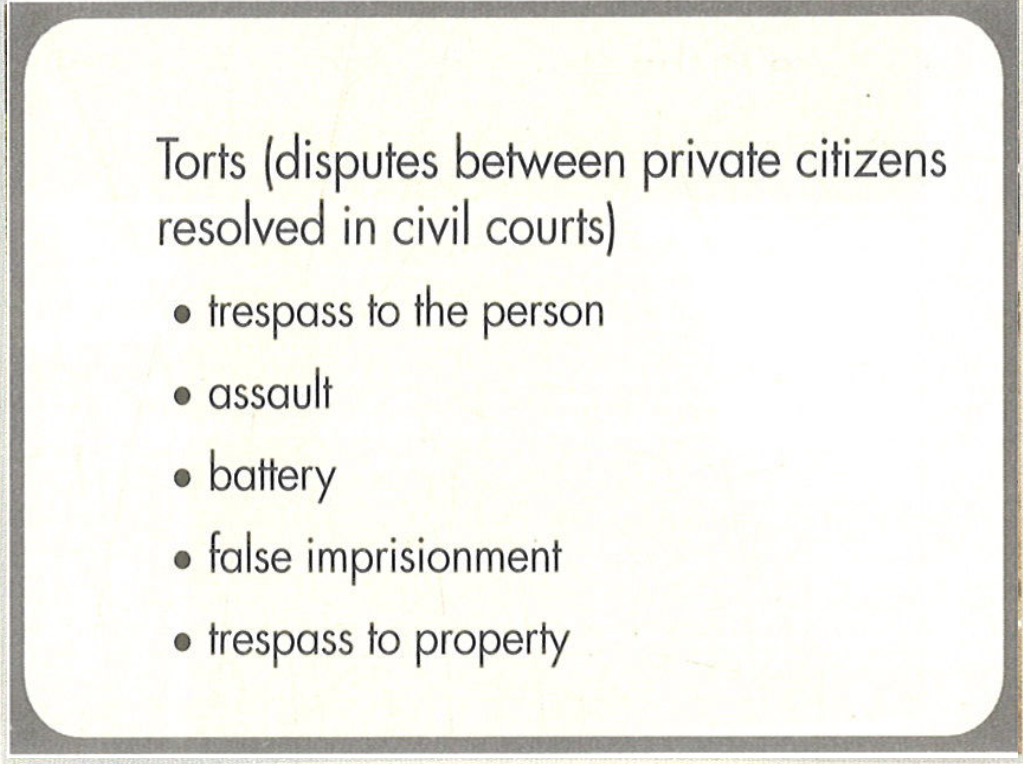
A tort is a civil wrong or wrongful act, whether intentional or accidental, from which injury occurs to another. Torts include all negligence cases as well as intentional wrongs which result in harm.

There are several heads of tort in English law. The most important are:

      • Negligence;
      • Trespass to land;
      • Nuisance;
      • Trespass to the person;
      • Defamation.

Lawyers usually devide these heads into two categories:

      • torts that cause harm to people, and
      • torts that cause harm to land.
Attività precedente Activity 5. Specialist Reading and Vocabulary Skills.
Prossima attività Activity 7. Torts. Types of trespass to the person.

Contattaci

Contatta il supporto
Ospite (Login)
Riepilogo della conservazione dei dati
Ottieni l'app mobile
Play Store App Store
Powered by Moodle

This theme was proudly developed by

Conecti.me